Home › Learn
Learn by playing with it
Thirteen short questions in six chapters, from why Chicago is short on homes to who pays for a new train line. Guess first, then move the sliders. Every number comes from a source you can check.
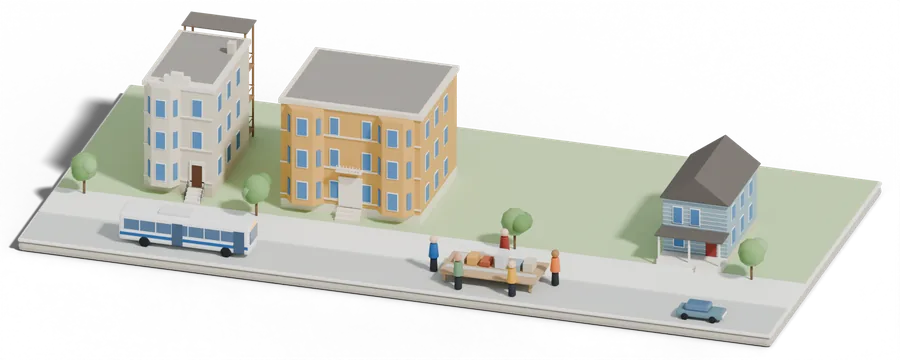
Housing: the problem
Why rents keep rising, and how far Chicago is from building enough.
How fast does Chicago need to build?
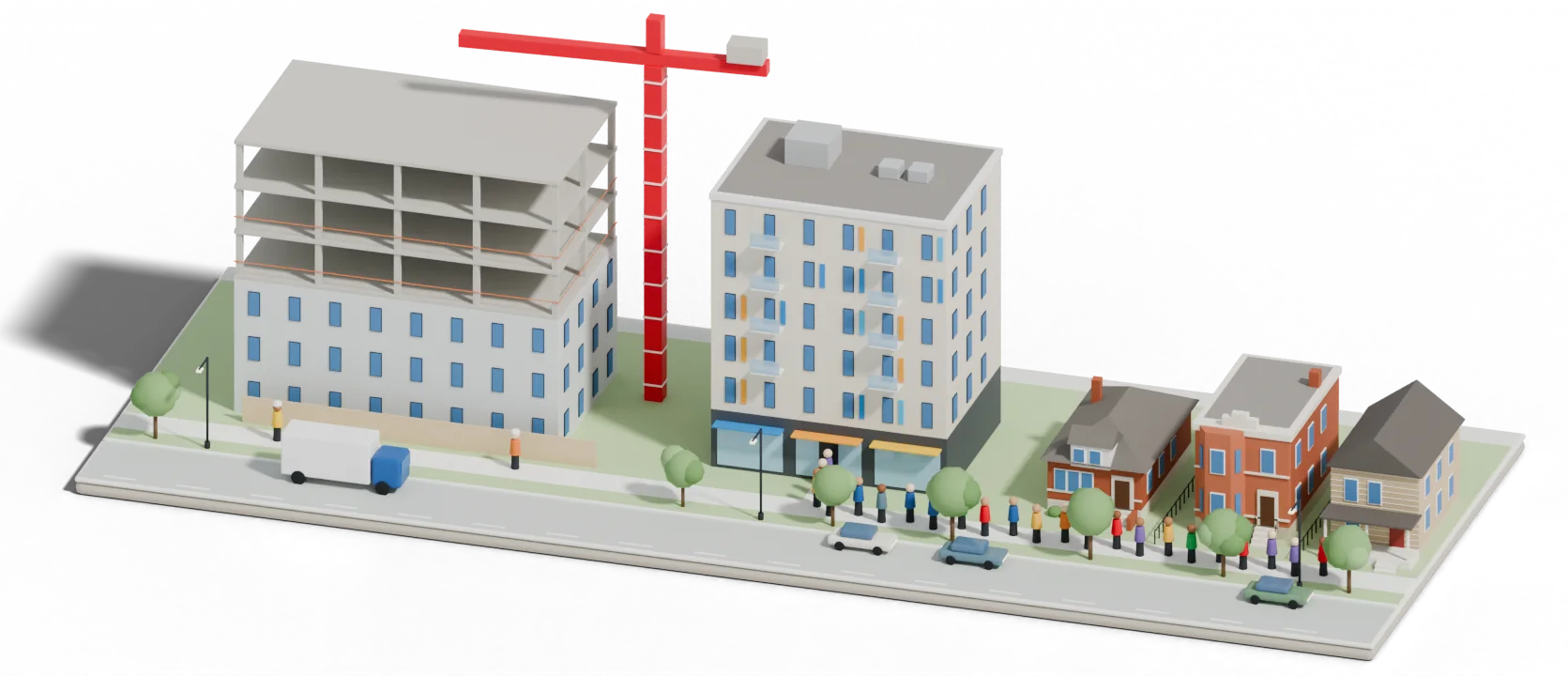
Chicago is about 54,141 homes short today, and the gap grows unless the city builds more than about 6,778 homes a year. Set the pace:
Up for Growth estimates the Chicago metro was 165,687 homes short. Chicago's share, by its share of the region's homes, is 32.7%: 54,141 homes. Chicago permitted 3,916 new homes in 2025.
Check this year's paceThe Permit Tracker counts every permit, daily.
Sources: Up for Growth, 2024 · Zillow via Mann Report · Census Building Permits Survey · Census ACS 2024 via Census Reporter
Does building more lower rent?
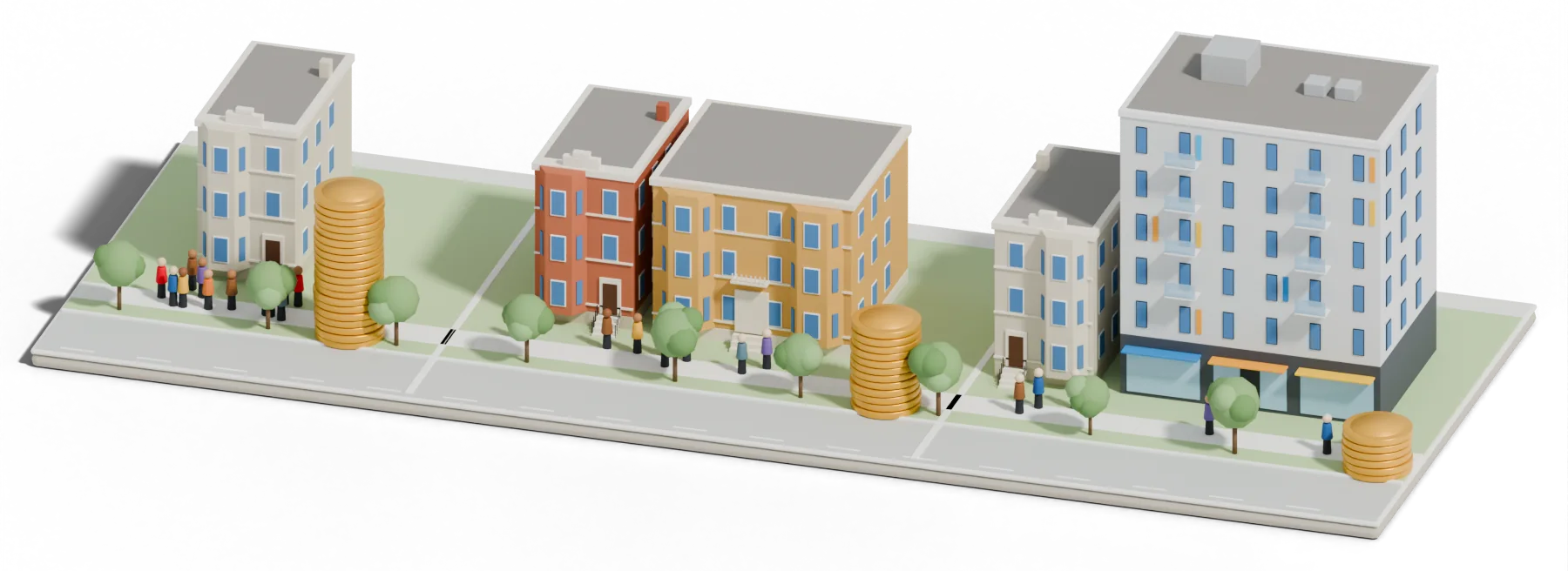
Today's median rent is about $1,440. Add new homes to Chicago's 1.28 million:
New buildings lower rents nearby: in 11 US cities, big new buildings in low-income areas cut nearby rents 5–7%, because the people moving in would otherwise compete for older apartments. How much a whole city's rent falls is less certain, so this shows a cautious and a strong estimate.
There is a limit. Builders only build when rents cover what a building costs to put up. As rents fall, fewer projects make sense and construction slows on its own, so the far end of this slider would not happen without subsidy. Building more can stop rents from racing ahead of pay and bring them down some; it cannot push them far below the cost of building.
Try it with a real planFix Chicago Housing shows the same range.
Sources: Terner Center, Making It Pencil (2023) · Asquith, Mast & Reed (Upjohn) · Mense, 2025 · Lauster & von Bergmann, 2024
Housing: the rules
What the zoning map lets anyone build, lot by lot.
How many homes fit on a Chicago lot?
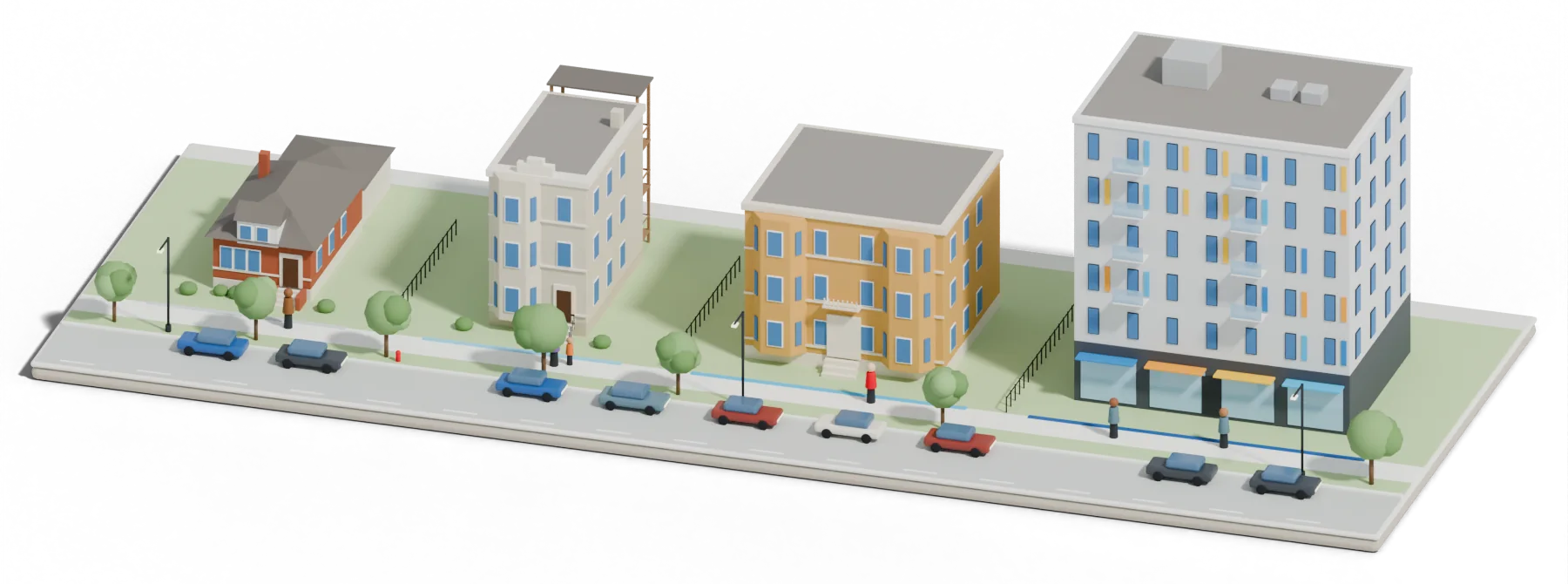
A typical Chicago lot is 25 by 125 feet. Pick its zoning:
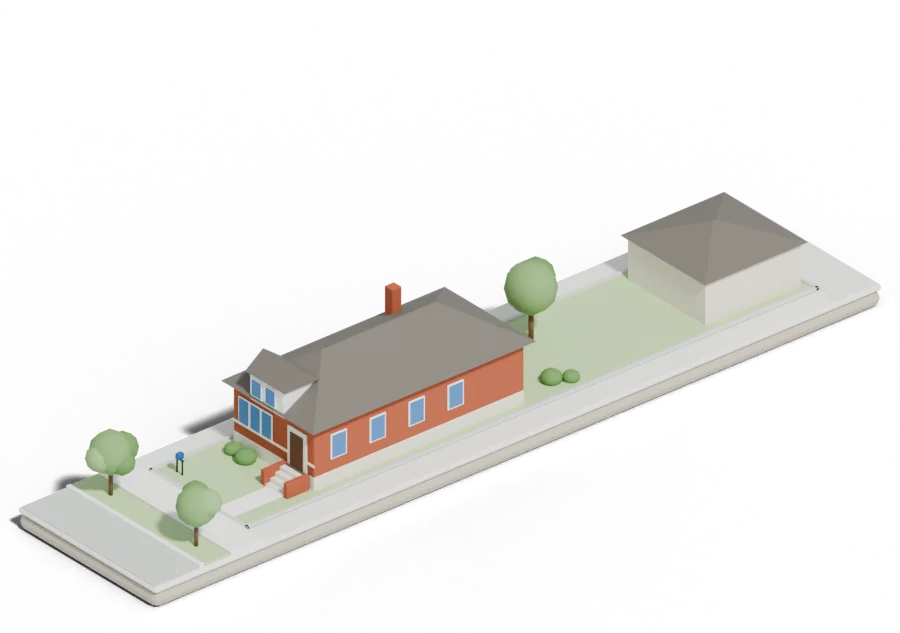
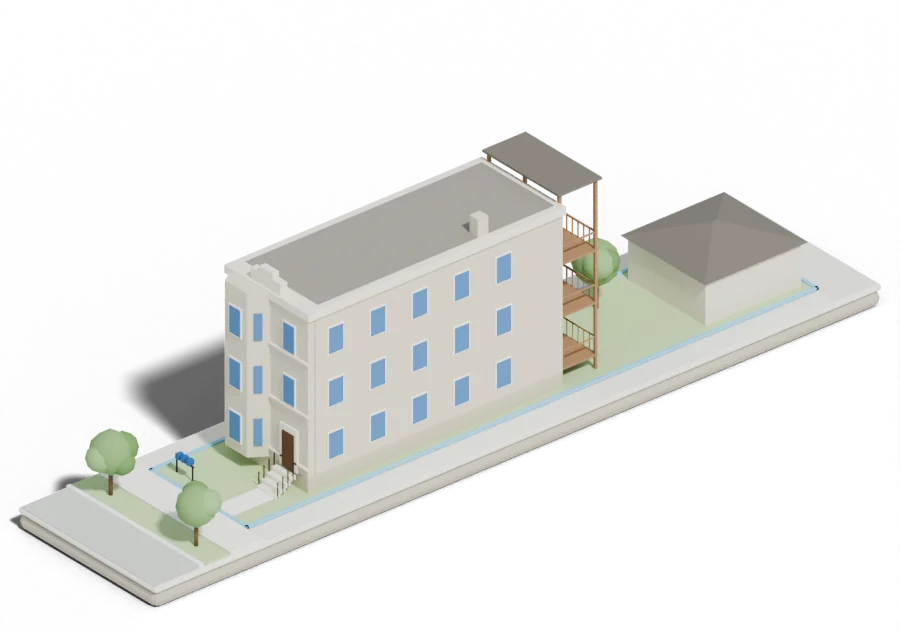
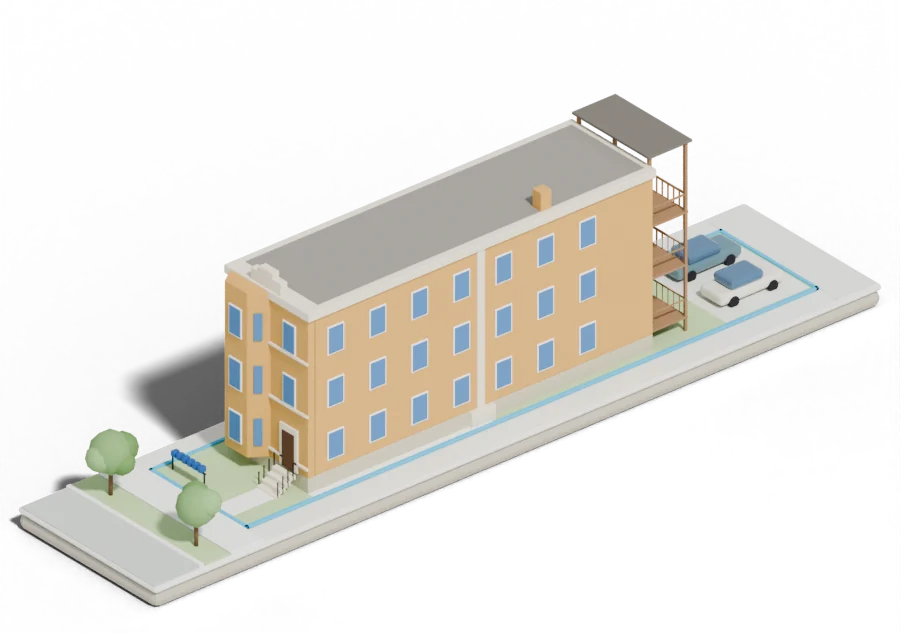
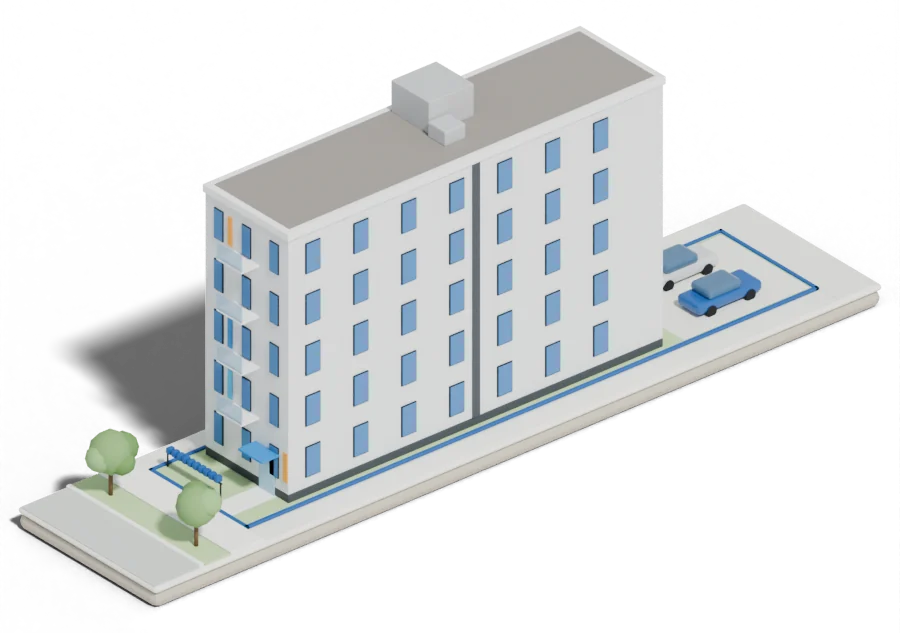
Chicago sorts every lot into a district, and each district caps homes with a minimum lot area per home. RS districts are mostly houses, RT two- and three-flats, RM apartment buildings. 41% of the city is zoned for single-family homes or two-flats only, and allowing more takes a City Council vote.
Look up your own lotAny address: its district, and how many homes it allows.
Rezone the city yourselfFix Chicago Housing's levels match real districts.
Sources: Chicago Zoning Ordinance, §17-2-0303 · Metropolitan Planning Council, 2023
Legal or illegal to build today?
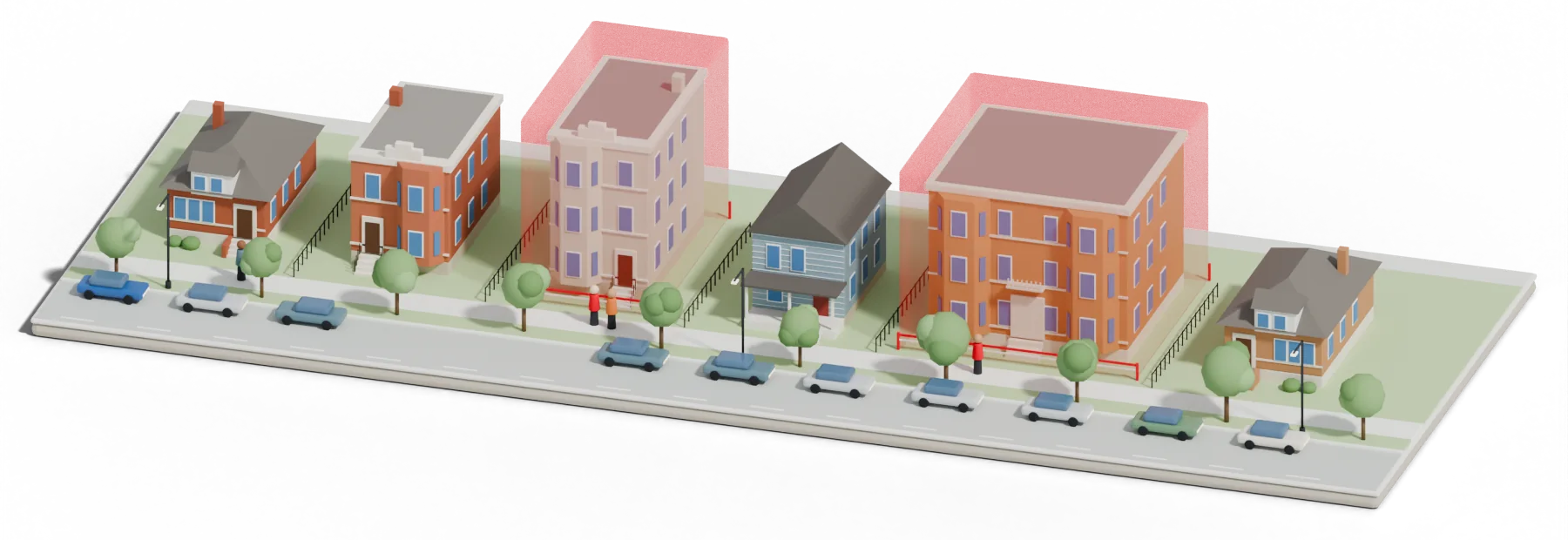
Each of these is a common Chicago building. Could you build it again on its lot under today's zoning?
Over the decades Chicago rezoned many neighborhoods to allow fewer homes. Checking real lot sizes and apartment counts from the Cook County Assessor, about 83,000 of the roughly 500,000 buildings on the map hold more homes than their lot is allowed today. From 1990 to 2010, downzoned areas added housing 1.8% versus 9.6% elsewhere.
Check a building you knowType its address to see if it could be built today.
See them on the mapTurn on “Show buildings that would be illegal to build today.”
Sources: Finding Press, downzoning in Chicago · Cook County Assessor, building characteristics
Housing: who decides, and who pays
How a project gets approved, what the city asks of it, and where the money comes from.
Who really decides what gets built on your block?
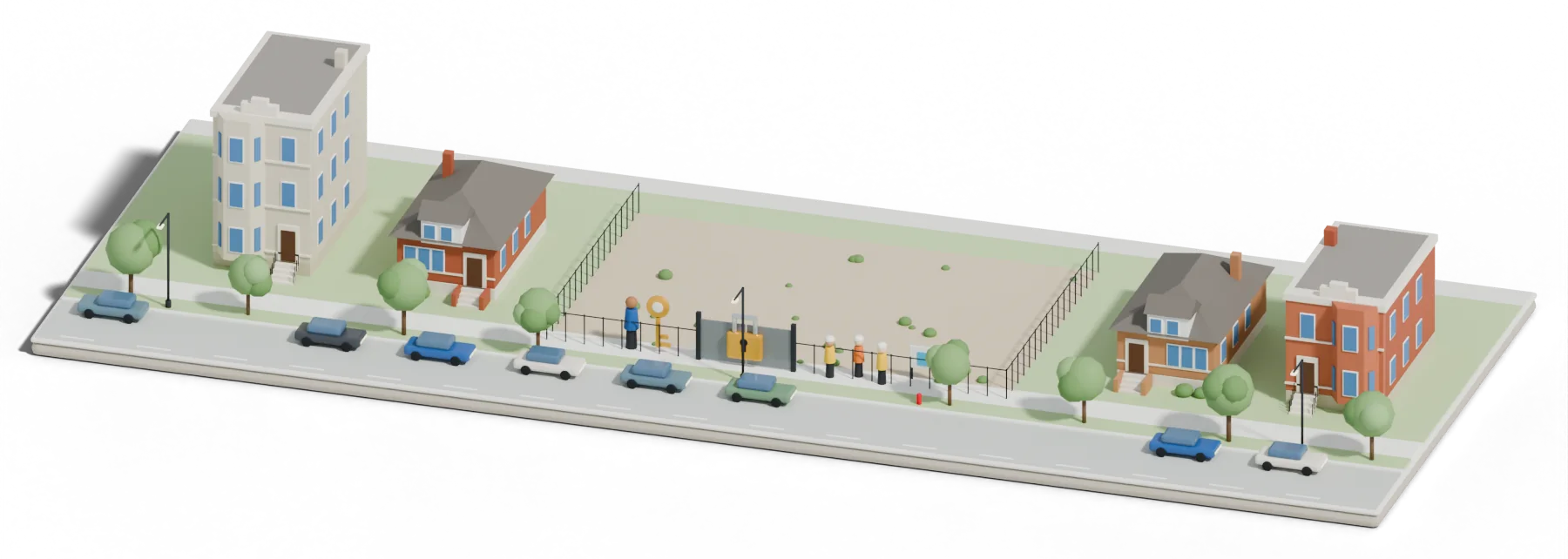
A developer wants to build 40 apartments next to an L station in your ward. How many of the 50 alderpeople usually decide?
It's a custom, not a law: City Council nearly always follows the local alderperson on zoning in their ward, which lets one person approve or quietly stop a building. A 2023 federal HUD investigation found it blocks affordable housing; HUD withdrew the finding in 2025.
Try Every ward modeEvery ward has to take its share.
Sources: WTTW, 2023 · Inside Climate News, 2025
How much of a new building should be affordable?
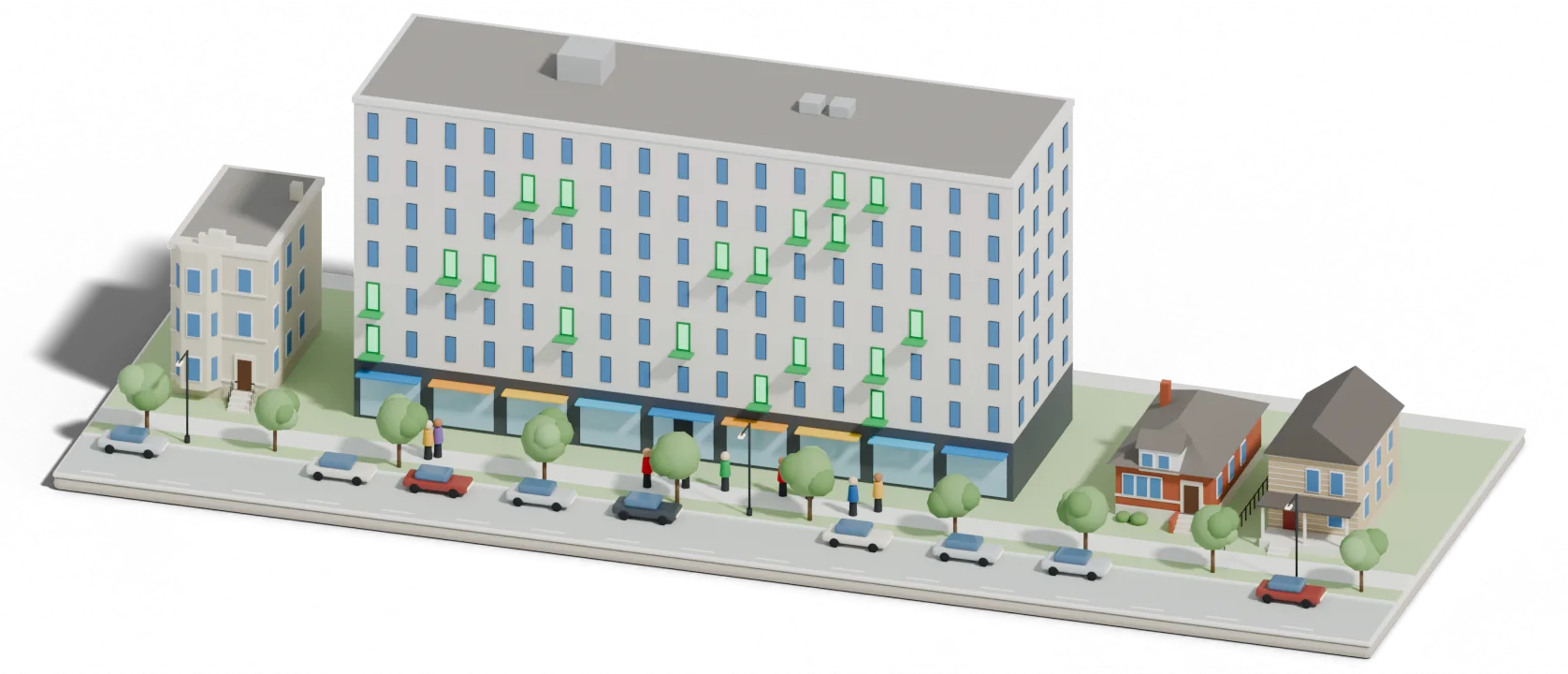
Chicago asks bigger buildings to rent some homes below market. Pick the share:
Projects of 10 or more homes that need a zoning change, city land or city money must rent 10–20% of units below market. A higher share means more affordable homes in each building, but some buildings stop making financial sense. Studies of real cities mostly find little or no drop in building; a Los Angeles model finds a bigger one. The numbers above are the housing tool's middle estimate.
Turn the dial in PoliciesAnd watch the homes and affordable homes change.
Sources: City of Chicago, ARO · Terner Center, 2024
Who pays for an affordable building?
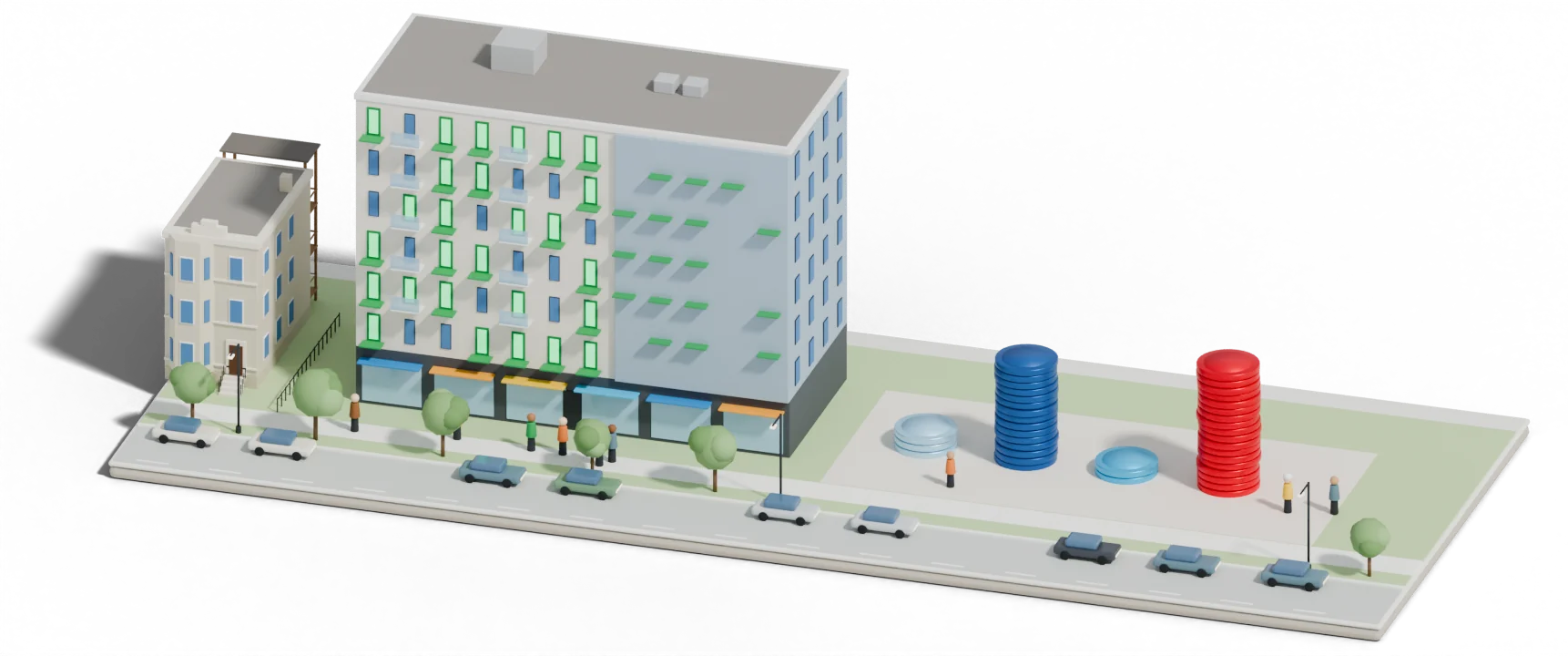
A new 50-home building in Chicago costs about $37 million. Its rents are set low on purpose. How much of the cost can those rents pay back?
The rents in a tax credit building are capped so people earning about 60% of the area median or less can afford them. That leaves enough to pay back only a small mortgage. Most of the money comes from investors who buy federal tax credits, and the rest, the gap, has to come from public sources the developer competes for: the city's housing money, TIF, state loans and others. Interest rates matter less than you might think here, because the mortgage is such a small slice.
Numbers: our estimate for a 50-home, five-story building at 3251 W. Division St., Nov. 2026 (a real 44-home building there cost $36 million). Sources: City of Chicago, 2025 Qualified Allocation Plan · Chicago YIMBY, May 2026
How do megaprojects get paid for?
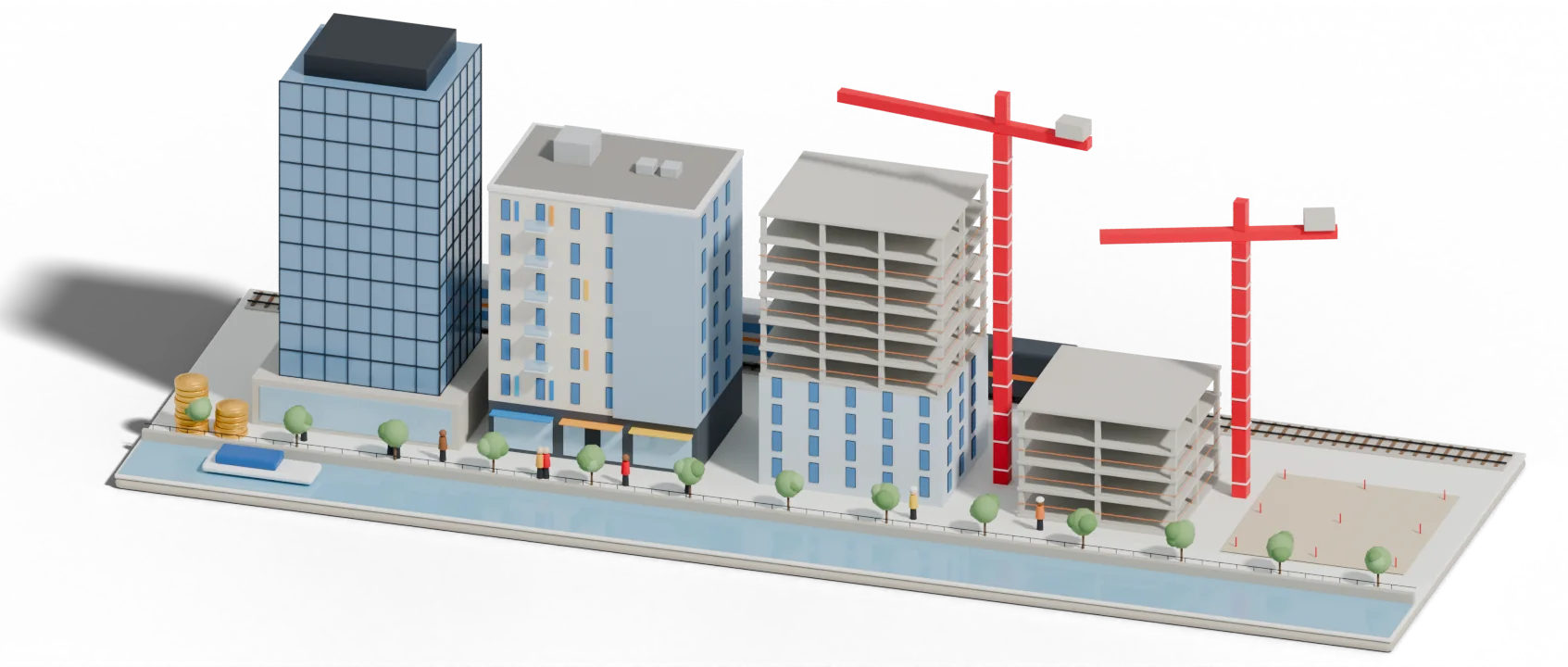
With tax increment financing, an area's property taxes are frozen at today's level for 23 years, and the growth pays for roads and utilities there. Say a site pays $10 million a year today. How fast will its taxes grow?
An example, not a real district's numbers.
A large site gets a planned development: zoning written for that site alone. The 1901 Project's zoning, for example, allows up to 9,463 homes around the United Center. After 23 years the growth goes back to the schools, the city and the other taxing bodies.
Vote on the megaprojects“Get the megaprojects built” in Policies.
Sources: Chicago Zoning Ordinance · Chicago YIMBY, 1901 Project · City of Chicago, TIF · Chicago Sun-Times, Sept. 2026
Transit: what it costs and who pays
What a dollar of transit buys, and who puts up the dollars.
What can $2 billion of transit buy?
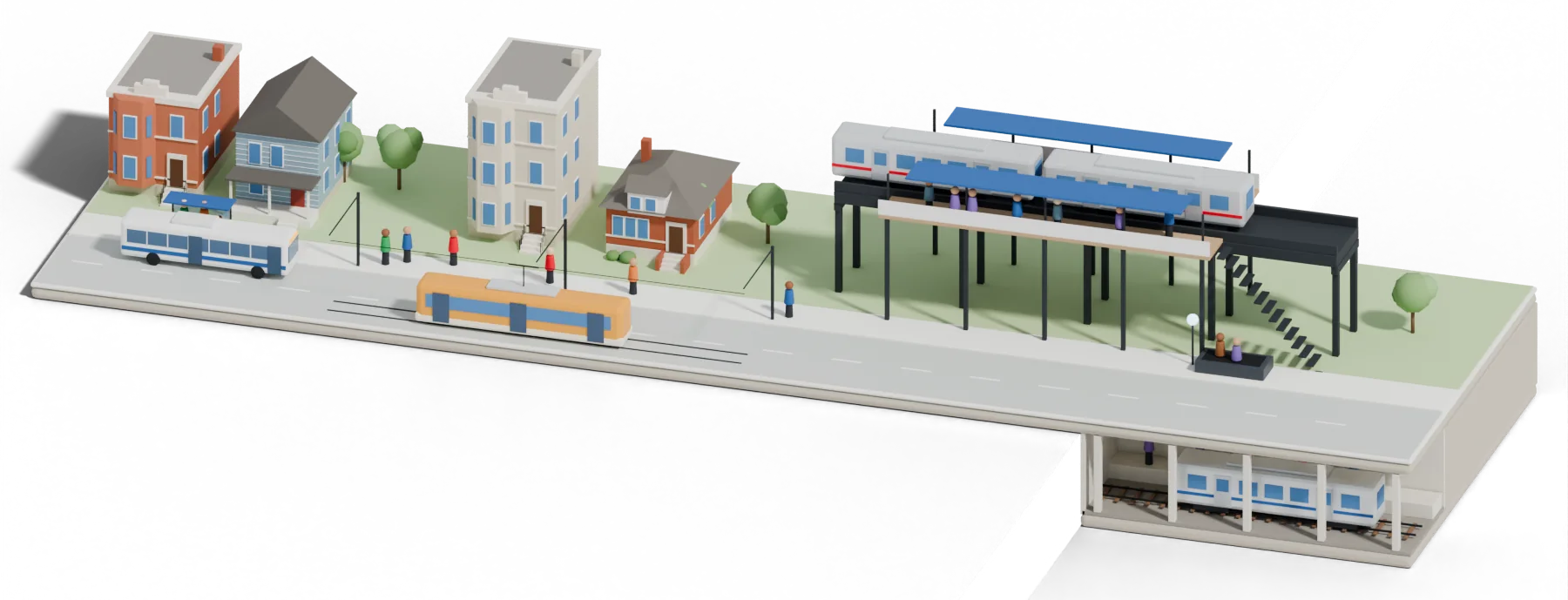
Set a budget and see how many miles of each you could build, at today's prices:
A subway runs under the street: fastest and most expensive. An elevated L costs less but needs room overhead. A streetcar runs on rails in the street, often in traffic. Bus rapid transit gives buses their own lanes, raised platforms and fewer stops.
Draw one of eachExpand Chicago Transit compares riders and cost.
Sources: Expand Chicago Transit: Sources
Who pays for a new line?
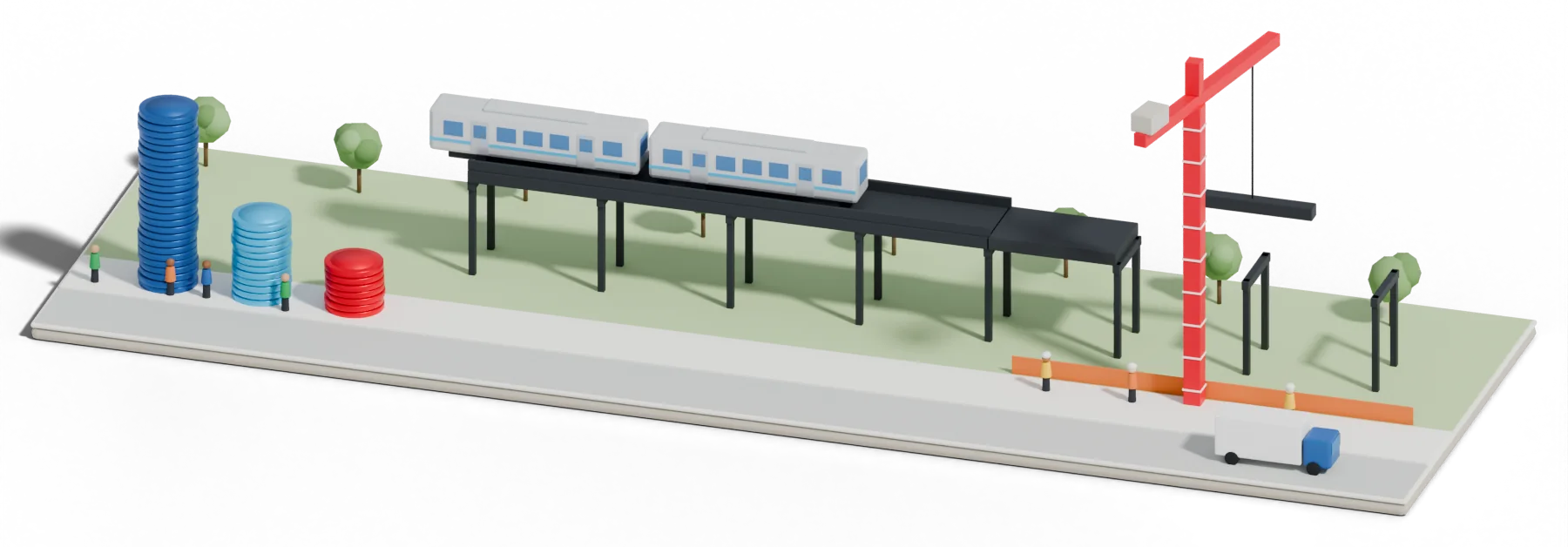
Set what a new line costs to build:
The federal Capital Investment Grants program pays part of new lines. Big projects (New Starts) usually get up to 60%; projects under $400 million (Small Starts) up to 80%, capped at $150 million. The rest is state and local money, now planned through NITA. The Red Line Extension has a signed federal grant.
See your plan's split“Who pays, and when” in the Learn tab.
Sources: FTA, Capital Investment Grants fact sheet · FTA, Red Line Extension grant profile
Transit: who runs it, and who rides
The new regional agency, and what makes a line worth building.
What did NITA prevent?
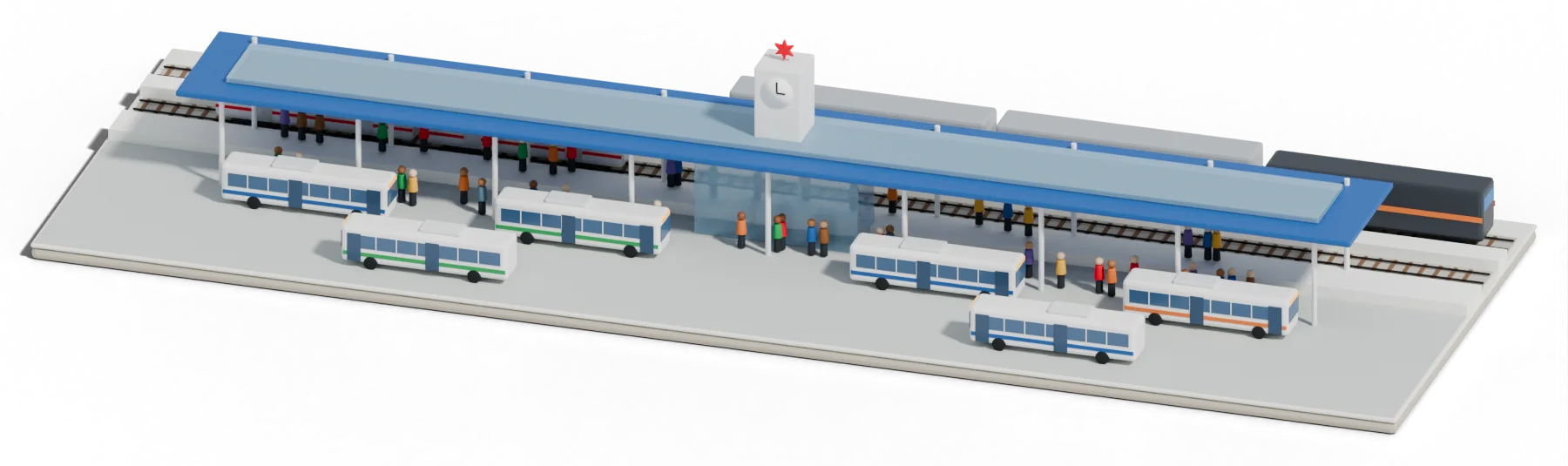
In March 2025 the agencies warned of about 40% less service without new money. Drag service down and see what riders lose:
Since September 2026 the Northern Illinois Transit Authority sets fares, splits the money and plans service for CTA, Metra and Pace. The 2025 law behind it adds about $1.5 billion a year. Fares must cover 25% of running costs, 20% from 2029.
See the cuts on the mapThe NITA card in Expand Chicago Transit.
Sources: ENR, 2025 · WTTW, March 2025 · MPC guide to the law · Metro Magazine, Nov. 2026
Which new line gets more new riders?
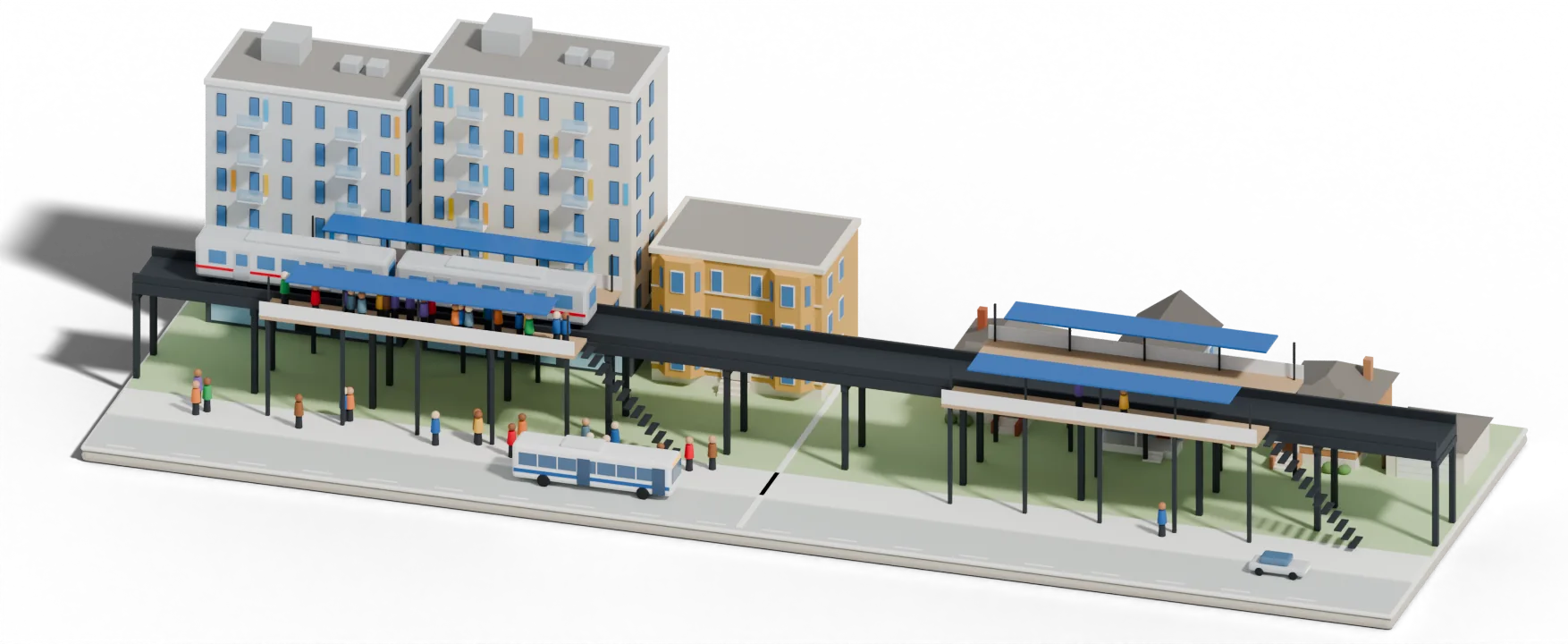
Guess. Both are real tests from Expand Chicago Transit:
The tool asks one question: whose trip does the line make faster? It looks at where people near the line commute and where the people who work there live (Census commute data), times each trip by transit today, with the line, and by car, and uses how people actually get to work in each neighborhood to estimate how many switch.
Draw your own lineOr start from scratch with no L at all.
Sources: CTA ridership data · Expand Chicago Transit: Sources
How Chicago got built
Why the city looks the way it does, block by block.
When did your block go up?
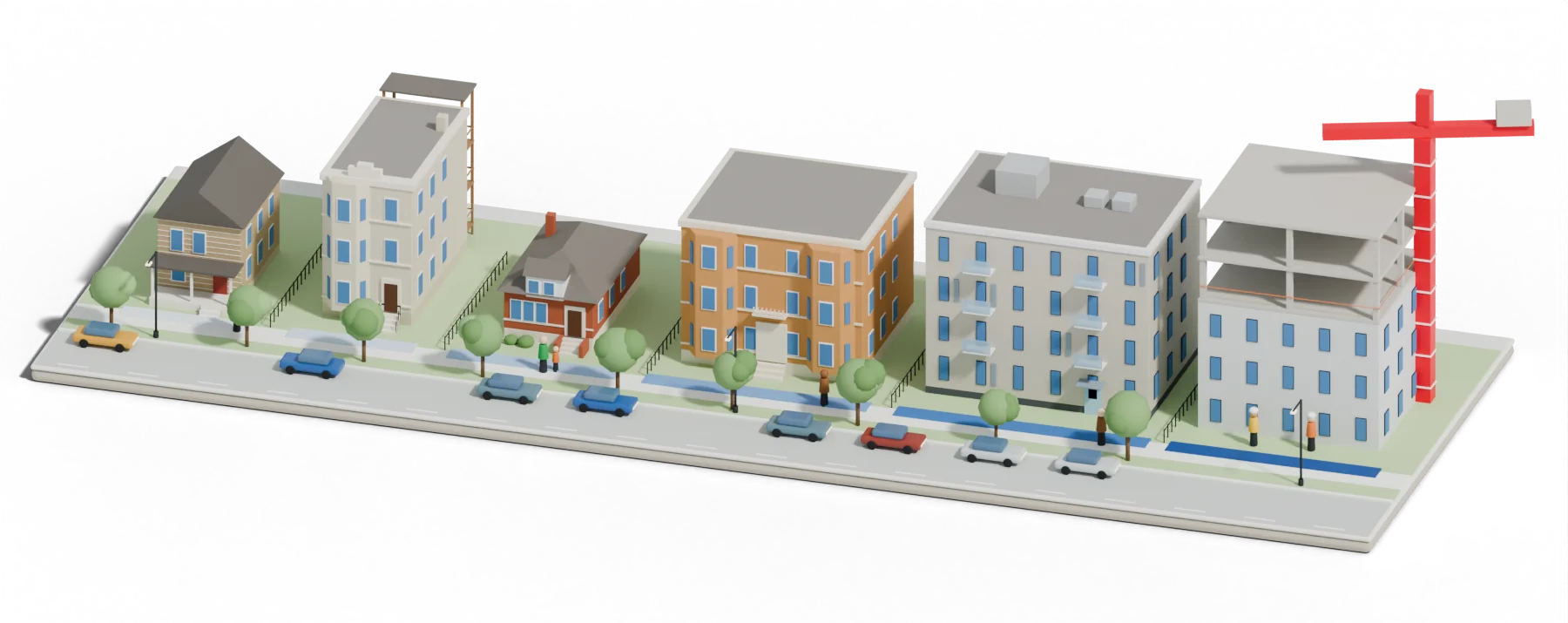
Every building standing today, colored by the decade it went up, with the city's population from 1870 to now. Press play and watch Chicago grow, then tap your neighborhood.
Six in 10 of Chicago's buildings with a known year went up before 1940, the years of the two-flats, three-flats and courtyard buildings that today's zoning often wouldn't allow. The city's population peaked at 3.6 million in 1950.
Sources: Cook County Assessor (year built) · U.S. Census Bureau, decennial counts · Chicago then and now: Sources